How much does a boat licence cost, and do you need one for an electric boat?
No licence needed in the UK; RYA Powerboat Level 2 costs £199–409. In Germany about €380, but electric boats up to 7.5 kW need no licence at all.

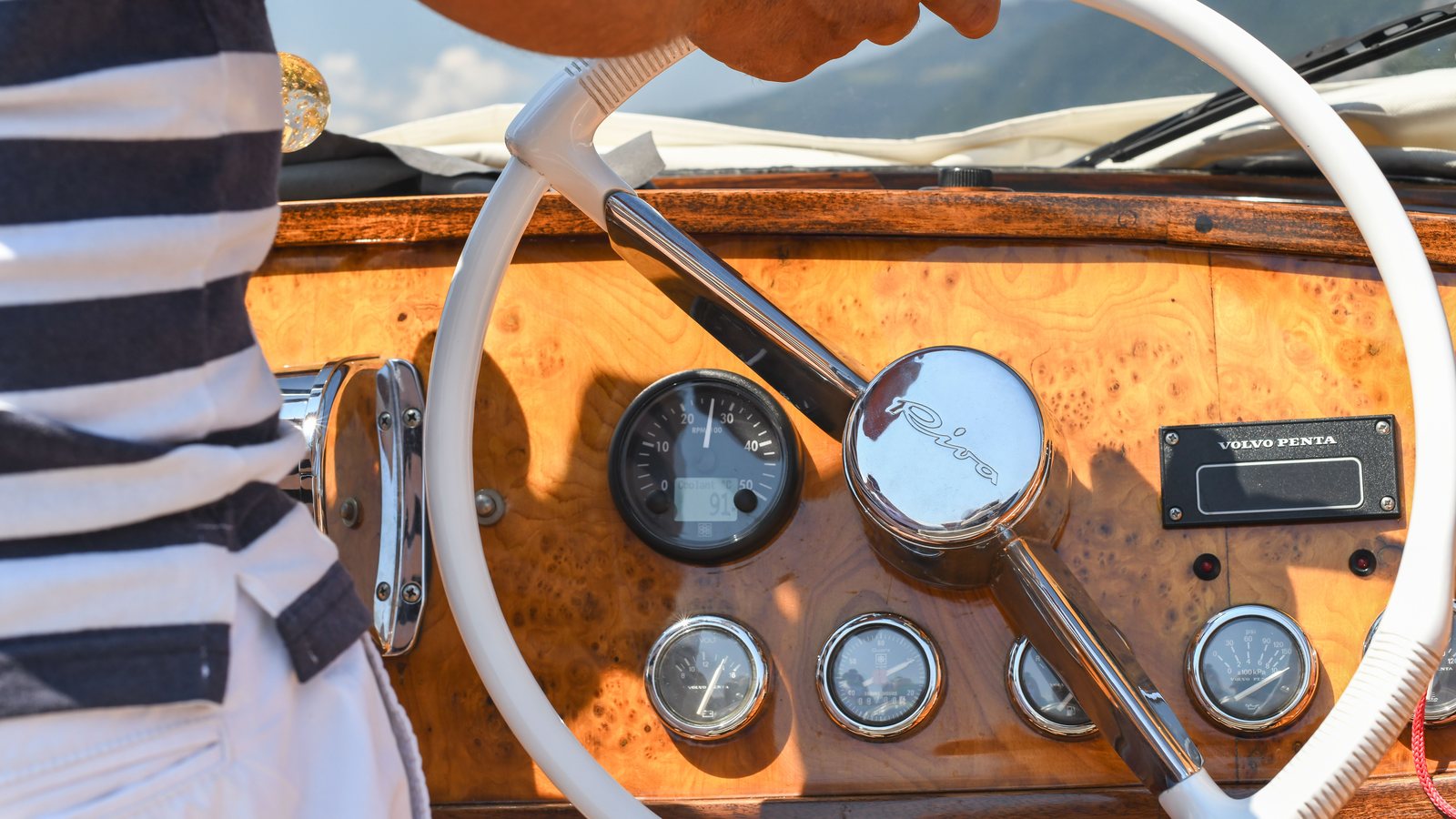
In the UK you need no licence for a private pleasure craft, electric or not. If you want a qualification anyway, the RYA Powerboat Level 2 course costs £199 to £409 at the schools we checked and qualifies you for the ICC, the international certificate for boating abroad. In Germany a licence costs about €380, but electric boats up to 7.5 kW continuous power need none.
Do I need a licence for an electric boat in the UK?
No. The RYA states that private pleasure craft of any length need no certificate of competence on UK waters (RYA). What you do need on most inland waters is a boat licence or registration, which is a different thing: Canal & River Trust waterways require a licence, Environment Agency waters such as the Thames a registration. Details are in our guide to electric boat registration.
What does the RYA course and the ICC cost?
The RYA issues the ICC (International Certificate for Operators of Pleasure Craft) free to members and for £75 to non-members; fast-track processing costs £60 for members and £125 otherwise. It is valid for five years and you can apply from the age of 16 (RYA, ICC, RYA, about the ICC).
To get it, you need a qualifying RYA certificate or an ICC assessment at an RYA training centre. Powerboat Level 2 counts as proof of competence (RYA, powerboat courses).
| Option | Price at the schools we checked (lowest / median / highest) |
|---|---|
| RYA Powerboat Level 2 (two-day course, no separate exam) | £199 / £325 / £409.49 (7 offers, 5 schools in England, Scotland and Wales) |
| ICC assessment at an RYA centre | £195 / £295 / £499 (3 offers) |
The RYA does not set a price for the assessment; each school does. Prices were read on the schools' websites on 24 October 2026.
Do I need a licence for an electric boat in Germany?
Only if the motor has more than 7.5 kW continuous power. Up to that limit, an electric boat is licence-free on German inland and coastal federal waterways, from age 16 (§ 5 SpFV). For combustion engines the limit is 11.03 kW. Lake Constance and Austria are stricter at 4.4 kW, Switzerland allows 6 kW. All limits with sources are in our guide electric boat without a licence.
Torqeedo and ePropulsion sell outboards below 4.4 kW, between 4.4 and 7.5 kW and above. Which model sits in which class is shown in our electric outboard comparison.
What does a boat licence cost in Germany?
You pay two things separately: the official exam fees, which are the same nationwide, and the course at a boating school, priced by each school. Almost none of them include the exam fees.
| Licence | Official fees | Course incl. practical training (lowest / median / highest) | Total, approx. |
|---|---|---|---|
| SBF Binnen (inland, motor) | €130.78 | €190 / €260 / €520 | €380 |
| SBF See (coastal) | €148.38 | €230 / €359 / €630 | €500 |
| SBF See + Binnen (combined) | €178.61 | €270 / €469 / €690 | €640 |
The "total" column is our own calculation: median course price at schools that do not include the exam, plus official fees. Course prices come from 26 boating schools in 14 German states, 19 offers with practical training each, read on 24 October 2026.
The fees are set by the transport ministry's fee regulation (WSBGebV, annex section 7) and collected by the two authorised associations DSV and DMYV (§ 16 SpFV, WSBGebV). The associations quote them including VAT (DSV, SBF fees):
| Item | Amount |
|---|---|
| Admission to the exam | €23.38 |
| Theory exam inland, motor | €37.29 |
| Practical exam inland | €40.29 |
| Theory exam coastal | €47.56 |
| Practical exam coastal | €47.62 |
| Additional inland theory for the combined licence | €30.23 |
| Issue of the licence (since 1 January 2026) | €29.82 |
Admission and issue are charged once for the combined licence, and there is no second practical exam. That makes it about €100 cheaper in fees than two separate licences.
On top come a passport photo, a medical certificate and a copy of your driving licence (§ 7 SpFV); photo and doctor have no official price. Without a driving licence you may be asked for a certificate of good conduct, which costs €13 (Federal Office of Justice). The minimum age is 16, under 18 with parental consent, and the licence does not expire (DSV, FAQ).
What does it cost in Austria and Switzerland?
In Austria the licence is called Schiffsführerpatent. For boats up to 10 m, Lower Austria lists €150.22 in official fees, including a €70 exam fee (noe.gv.at, § 7 Schiffsbetriebsverordnung). Ten course offers from seven schools cost €295 to €899, median €463, mostly without the exam.
In Switzerland motorboats need a category A licence, with fees set by each canton:
| Canton | Theory | Practical | Licence | Application | Total |
|---|---|---|---|---|---|
| Zurich | CHF 40 | CHF 140 | CHF 50 | – | CHF 230 |
| Bern | CHF 30 | CHF 170 | CHF 80 | CHF 50 | CHF 330 |
| Lucerne | CHF 30 | CHF 130 | CHF 50 | CHF 30 | CHF 240 |
Sources: Canton of Zurich, SVSA Bern, Lucerne road traffic office. Bern's practical exam includes a CHF 50 travel allowance. Training is the expensive part in Switzerland: course packages cost CHF 1,199 to 2,400, a driving lesson about CHF 100 to 120, and schools expect 15 to 20 lessons.
Is a licence worth it if I want to go electric?
That depends on power and where you boat. In the UK you can start without one. In Germany a motor of up to 7.5 kW on federal waterways such as the Havel or Spree saves you about €380. If you only want to hire a houseboat, a charter certificate after a briefing by the hire company is enough on certain German waters (houseboat hire without a licence).
Sources and image rights
- Images
- Rosa Stone / Pexels (conditions)
- Checked
- 24 October 2026 by Andreas Lakeberg
Know a rule, a price or a model we missed? Write to contact@voltnautic.com. We check every tip against the source and note updates at the top of the article.
Legal notice. This article is a general summary of regulations and is not legal advice. Only the linked laws and regulations in their current version and the responsible authority are binding, for example the navigation authority, the local council or the lake operator. Information checked: 24 October 2026.
Disclaimer. We research every article carefully and to the best of our knowledge. Prices, models and regulations change, so we cannot guarantee that all information is complete, current or correct. Please check anything important with the original source before you make a decision. To the extent permitted by law, we accept no liability for errors or omissions.