Electric boat registration and licensing: the rules in the UK, Germany, Austria, Switzerland and NL
UK waterways want a licence or registration, and electric boats pay less. On the Continent you need a number, rarely an approval. The rules with sources.

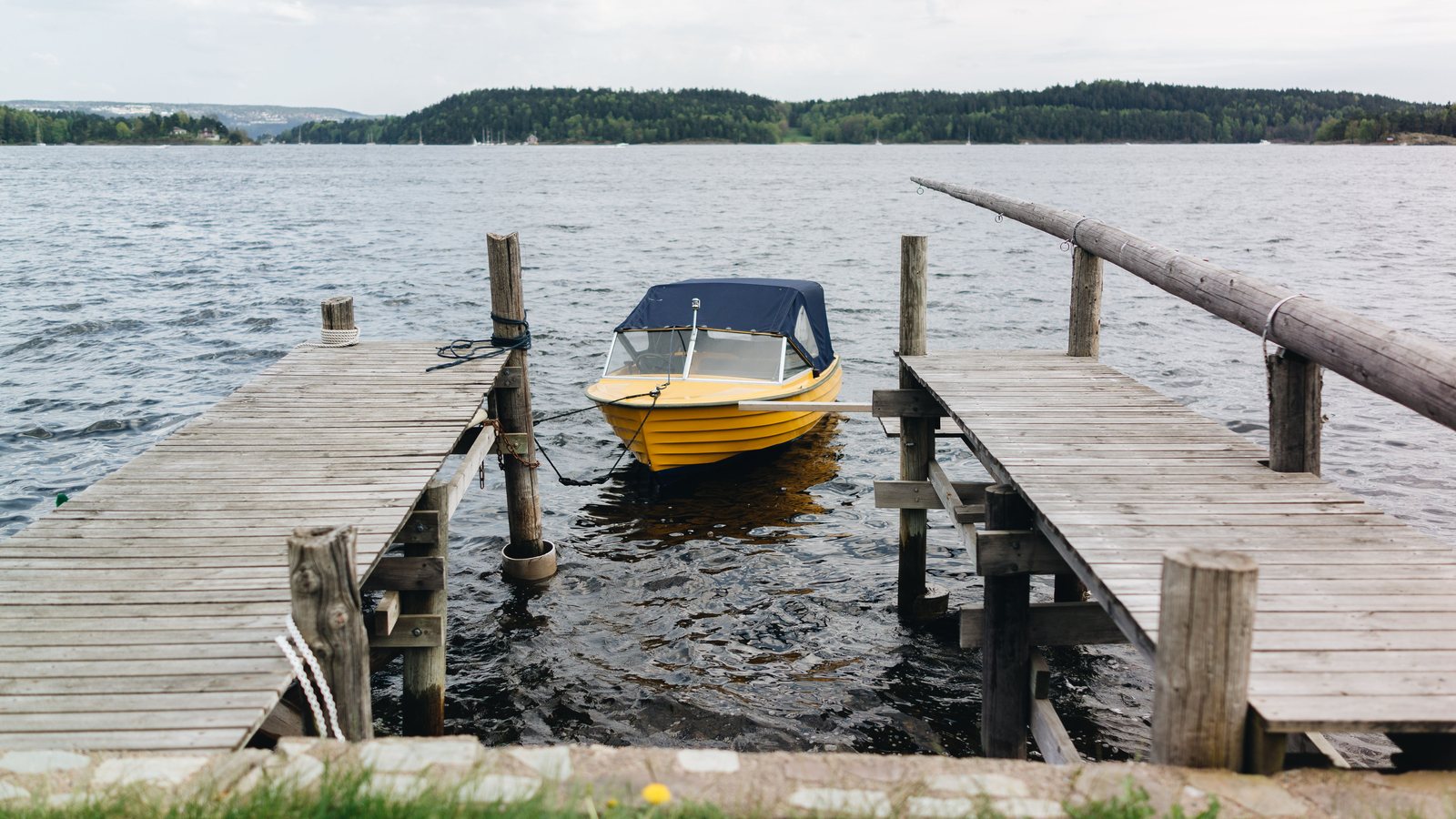
In the UK, your electric boat needs a licence or registration from the navigation authority, and an electric drive makes it cheaper: the Canal & River Trust gives 25 % off if the electric motor is the only propulsion. On German federal waterways, every motorised pleasure craft under 20 m needs an identification number, but no technical approval. Lake Constance and Switzerland are stricter, while Austria leaves battery boats under 4.4 kW approval-free.
What does an electric boat need in the UK, and what does it save?
In the UK it is not about technical approval, but about a licence or registration with the navigation authority responsible:
- Canal & River Trust: every boat on its canals and rivers needs a licence, with or without a motor (CRT).
- Environment Agency: all boats on its waterways, such as the Thames, must be registered (GOV.UK).
- Windermere: every powered boat needs its own Windermere registration, explicitly including boats with electric motors (Lake District National Park).
In return, an electric boat pays less. The Canal & River Trust gives a 25 % discount on the licence if the electric motor is the boat's sole means of propulsion (CRT licence terms). Portable boats up to 5 m with a motor under 4 bhp on canals or 10 bhp on rivers get 50 % off (CRT). With the Environment Agency, electric boats pay 75 % of the powered boat charge, provided they are propelled solely by an electric motor (GOV.UK).
Do I need an identification number in Germany?
Yes, on the federal waterways. Motorised pleasure craft under 20 m need an official or officially recognised small craft identification number (Kleinfahrzeugkennzeichen). The Federal Ministry of Transport stresses that this is not a technical approval (BMV). The number must be at least 10 cm high, permanent, light on dark or dark on light, on both sides of the bow or stern or on the transom (§ 2 KlFzKV-BinSch).
What applies in Bavaria?
On Bavaria's state-owned lakes you need no licence, but a permit and an identification number from the district authority, on both sides of the boat (BaySchiffO). Bavaria treats electric boats more generously than combustion boats:
- No technical approval (TÜV): electric boats are exempt (BaySchiffO).
- Unlimited permit: for electric boats it is granted without time limit, though it can be revoked. Combustion boats get five years at most, and only on Lake Starnberg and the Ammersee (naturerlebnis.bayern.de).
- No lower power limit: on the Chiemsee, Waginger See and Tachinger See, electric boats always need a permit and a number, however small the motor (District Office Traunstein).
And on Lake Constance?
On Lake Constance, every boat with mechanical propulsion needs an approval, including electric boats, with no lower power limit. For pleasure craft, the approval expires after three years. Motorboats with a hull length under 2.50 m are not approved at all (BSO).
Batteries get special treatment: boats with a built-in lithium-ion battery for propulsion or on-board power must carry the warning sign W012 (“Warning: electricity”, EN ISO 7010) on both sides next to the registration number and on the stern (BSO).
Are there German waters that need no permit at all?
Yes, in Brandenburg. On standing, non-navigable waters, small electric boats up to 1 kW and 1,500 kg displacement need no permit (BbgGemV).
What applies in Austria and Switzerland?
| Country | Rule | Source |
|---|---|---|
| Austria | Battery-electric boats under 4.4 kW need no approval, except for commercial passenger transport | RIS |
| Switzerland | Boats on public waters need a registration plate and a ship's certificate, issued by the canton where the boat is based | BSV |
| Switzerland, exception | Boats under 2.50 m need no plate, but may only use the inner shore zone (150 m) | BSV |
To register a new electric motor in Switzerland, you need the manufacturer's data with CE marking, make, type, serial number and power in kilowatts or watts. The canton of Bern, for example, asks for exactly that (SVSA Bern).
And in the Netherlands?
Only fast motorboats that can go faster than 20 km/h need a registration number there. They must be registered to their owner. Slower pleasure craft need no number (wetten.overheid.nl).
Sources and image rights
- Images
- Boris K. / Pexels (conditions)
- Checked
- 23 October 2026 by Andreas Lakeberg
Know a rule, a price or a model we missed? Write to contact@voltnautic.com. We check every tip against the source and note updates at the top of the article.
Legal notice. This article is a general summary of regulations and is not legal advice. Only the linked laws and regulations in their current version and the responsible authority are binding, for example the navigation authority, the local council or the lake operator. Information checked: 23 October 2026.
Disclaimer. We research every article carefully and to the best of our knowledge. Prices, models and regulations change, so we cannot guarantee that all information is complete, current or correct. Please check anything important with the original source before you make a decision. To the extent permitted by law, we accept no liability for errors or omissions.