Living on a houseboat in Germany: what is allowed? Permits, moorings and registering your address
Houseboat or house on the water? Which authorities must agree, when building law applies and when you can register your home address on a boat in Germany.

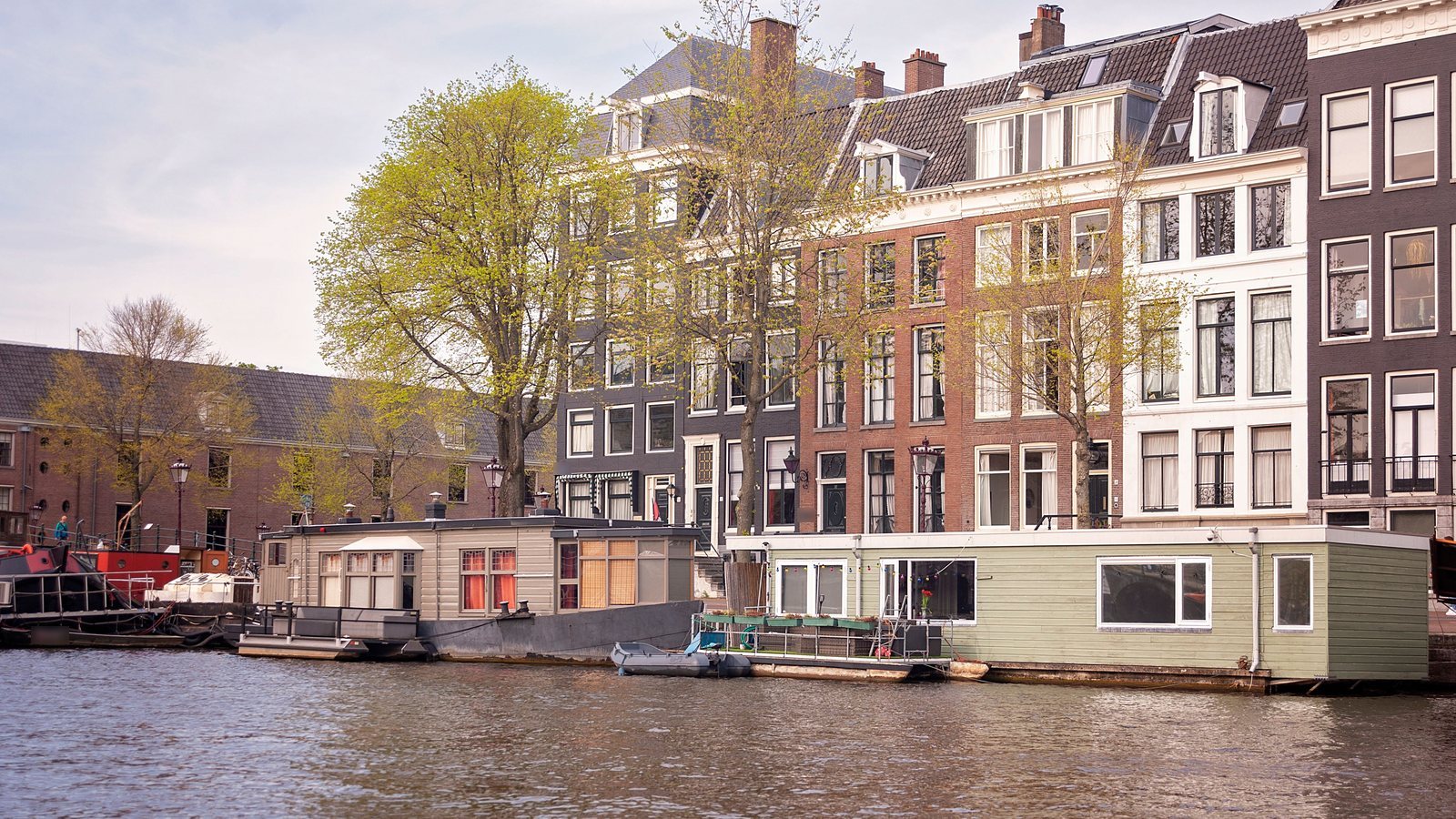
You can live permanently on a houseboat in Germany, but only with an approved mooring. The responsible body is the state's water authority, and on federal waterways also the Waterways and Shipping Office (WSA). If the boat stays in one place and replaces a home, the state building codes may treat it as a building that needs planning permission. You can register a boat as your home address if it rarely moves.
Is a houseboat a house or a boat?
It depends on how you use it. In 2018 the Higher Administrative Court of Berlin-Brandenburg ruled: if the boat replaces a weekend cottage or a home, it is a building structure; if it is used for cruising like a pleasure boat, it is not. Size or a comparison of time moored and time under way is not enough on its own. In the case decided, the houseboat was not a building: many engine hours, no kitchen, no sanitary facilities, registered as a small craft (OVG 2 S 13.18).
The state building codes say much the same. In Brandenburg and Hamburg, a structure without a fixed connection to the ground is a building structure if it is mainly used in one place (BbgBO § 2, HBauO). Brandenburg explicitly excludes pleasure and charter boats used as vessels.
Hamburg has a new situation: until the end of 2025, floating structures used in one place were excluded from the building code; since 1 January 2026 only ships are (city development authority synopsis). Hamburg's houseboat information page still says the building code does not apply to floating structures (hamburg.de); it is probably out of date. In Mecklenburg-Western Pomerania, the 2005 draft law explicitly brought floating houses under the building code (state parliament); we could not check the version in force today.
Which permits do you need?
Almost always several. For houseboats on federal waterways, the WSA Spree-Havel usually names two: the WSA's river and shipping police permit under § 31 of the Federal Waterways Act and the permit from the state water authority (WSA Spree-Havel information sheet, § 31 WaStrG). The WSA also requires:
- a right of access from land, which is a mandatory condition,
- a mooring outside the navigation channel,
- a usage agreement with the federal government, with a fee for the water area,
- a certificate of buoyancy from a publicly appointed marine surveyor (information sheet on moorings),
- a special transport permit for moving the boat to its mooring.
The WSA recommends first checking with the state authority whether the mooring can be approved. It does not arrange free moorings.
In the states it looks like this:
- Berlin: the water authority grants permits under the Berlin Water Act; in individual cases the district also requires planning permission. For a floating structure in Treptow-Köpenick, the district asked for a checked fire safety certificate and a report on structural stability and buoyancy (Senate answer 19/26689, 19/26690). The Senate has not designated any moorings for houseboats (Senate answer 17/14244, as of 2014).
- Brandenburg: the water authority approves structures in waters. The permit includes other state approvals, but is only granted revocably (BbgWG § 87).
- Hamburg: the district water authority grants a water law permit and the building authority checks planning law. A buoyancy certificate and a fire safety inspection by the fire brigade are required. Living in the port area is not allowed. The water area costs €5 per square metre a year (hamburg.de).
Can you register your home address on a houseboat?
Yes, if the boat does not move or only moves occasionally. The Federal Registration Act says houseboats only count as a home if they are not moved, or only occasionally (§ 20 BMG). As with any home, you must register within two weeks of moving in (§ 17 BMG). If you move onto an inland vessel in the German ship register and have no other registered home, you register at the home port (§ 28 BMG).
In Hamburg, a permanent mooring permit gives the mooring its own registration address (Hamburg-Mitte guidelines, as of 2011). Registering on an inland vessel costs €12 there and is only possible at the Hamburg Service office in the city centre (Hamburg Service).
How do electricity, water and sewage get to the boat?
Hamburg-Mitte is the clearest: every houseboat must in principle discharge its wastewater into the public sewer, and electricity, water and sewage come from land to a connection shaft (Hamburg-Mitte guidelines). Brandenburg does not require a connection, but prohibits discharging liquids from a floating structure into the water (LSchiffV § 65). According to the State Office for Agriculture and Environment of Western Pomerania, houseboats are subject to the same noise and emission requirements as fixed houses (City of Greifswald).
If you want a houseboat you can also cruise, see Electric houseboats for sale. To try one out, an electric houseboat for hire is a good start.
Sources and image rights
- Images
- Marcelo Verfe / Pexels (conditions)
- Checked
- 29 October 2026 by Andreas Lakeberg
Know a rule, a price or a model we missed? Write to contact@voltnautic.com. We check every tip against the source and note updates at the top of the article.
Legal notice. This article is a general summary of regulations and is not legal advice. Only the linked laws and regulations in their current version and the responsible authority are binding, for example the navigation authority, the local council or the lake operator. Information checked: 29 October 2026.
Disclaimer. We research every article carefully and to the best of our knowledge. Prices, models and regulations change, so we cannot guarantee that all information is complete, current or correct. Please check anything important with the original source before you make a decision. To the extent permitted by law, we accept no liability for errors or omissions.