Electric outboards of 10 hp and more: what is there and what does it cost? Mercury Avator and RAD Propulsion
Electric outboards to replace 3.5 to 60 hp petrol engines: power, battery, running time, price and licence limits for Mercury Avator and RAD Propulsion.

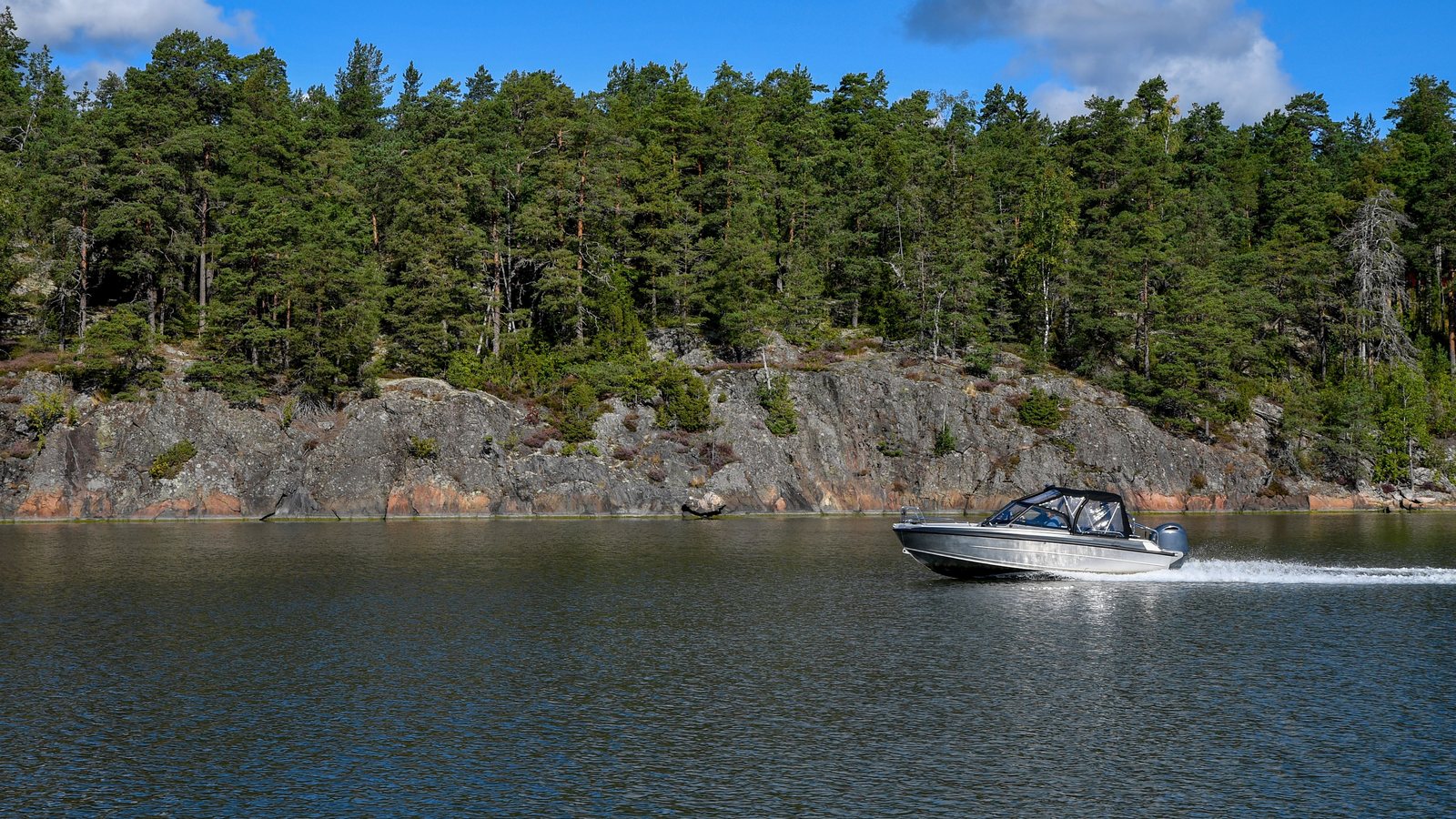
Electric outboards now exist for boats that used to run a 10 to 60 hp petrol engine. Mercury builds the Avator range from 0.75 to 11 kW, which by Mercury's own comparison equals 3.5 to 15 hp. RAD Propulsion from the UK plays in another league with 40 and 120 kW, for tenders and RIBs with 60 hp and more. In the UK, the Avator 7.5e starts at £2,392 (dealer RRP including VAT); for RAD there is no purchase price, only leasing.
Mercury Avator and RAD Propulsion compared
| Model | Power (manufacturer) | Comparison (manufacturer) | Battery | Weight without battery | Price UK (dealer RRP) | Price Germany |
|---|---|---|---|---|---|---|
| Mercury Avator 7.5e | 0.75 kW shaft, 0.92 kW input | like a 3.5 hp four-stroke | 1.03 kWh, built in | 19.5 kg | £2,392 inc. VAT | RRP €2,794 inc. VAT |
| Mercury Avator 20e | 2.2 kW shaft, 3.08 kW input | like a 5 hp four-stroke | 2.3 or 5.4 kWh, external | 21.1 kg | £5,971 inc. VAT | RRP €5,028.90 inc. VAT |
| Mercury Avator 35e | 3.7 kW shaft, 4.47 kW input | like a 9.9 hp four-stroke | 2.3 or 5.4 kWh, external | 21.3 kg | £8,542 inc. VAT | RRP €5,186.00 inc. VAT |
| Mercury Avator 75e | 7.5 kW shaft, 8.6 kW input | 10 hp | 5.4 kWh per module, external | 58.5 kg | £18,065 inc. VAT | €8,599 (dealer, motor without battery) |
| Mercury Avator 110e | 11 kW shaft, 12.8 kW input | 15 hp | 5.4 kWh per module, external | 56 kg | £19,684 inc. VAT | €10,249 (dealer, motor without battery) |
| RAD 40 | 40 kW continuous | like a 60 hp petrol outboard | 20–61 kWh recommended | 98 / 104 kg | no purchase price, leasing | – |
| RAD 120 | 120 kW continuous | not stated | 61–244 kWh | 175 kg | no purchase price, leasing | – |
Sources: Mercury Avator brochure (EMEA, German), UK prices Pro-Rig Marine, Mercury price list Germany 20e/35e, RRP 7.5e Germany, dealer prices 75e and 110e, hp comparisons from Mercury press releases (7.5e, 20e/35e, 75e/110e), RAD 40, RAD 120.
The UK prices are the dealer's RRPs including VAT; whether batteries are included is not clear from the dealer's page, so ask before you compare them with the German prices. Mercury states two power figures: the rated power at the propeller shaft and the input power the motor draws from the battery. Neither Mercury nor RAD states a peak power.
Mercury Avator: from dinghy to 15 hp replacement
The Avator range runs at 48 V. On the small 7.5e, the 1.03 kWh battery sits under the cowling and can be swapped. From the 20e upwards, external battery modules connect to the motor, and up to four can be linked through a "Power Center". The 20e and 35e use 2.3 kWh modules; the 75e and 110e use 5.4 kWh lithium iron phosphate modules weighing 42.2 kg each (brochure). The 7.5e, 20e and 35e come with tiller or remote control, the 110e with remote control only.
Mercury only quotes running times for the small models. On one charge, the 7.5e runs a 13 ft boat for 1 hour at full throttle (5 miles) and 19.4 hours at 25% throttle (34 miles). The 20e manages up to 16 hours on one 2.3 kWh battery, the 35e up to 18 hours on two, tested on a 12 ft boat without stating the throttle setting (brochure). There are no running times or ranges for the 75e and 110e. Why speed has such a big effect on running time is explained in Electric boat motor range: how far can you go on one charge?.
Charging the 7.5e takes about 9 hours with the 110 W charger supplied and under 2 hours at 520 W. A 2.3 kWh battery needs about 4.5 hours at 520 W, a 5.4 kWh module about 5 hours with the built-in 1 kW charger. Mercury gives a 3-year warranty for leisure use, but excludes the battery (price list).
Dealers include Pro-Rig Marine and Clyde Outboard Services in the UK, Allesmarine in the Netherlands, and dealers in Germany, Austria and Switzerland. Prices there are sometimes below the RRP: Greenboatsolutions in Berlin sells the 7.5e for €2,599 including VAT (Greenboat).
RAD Propulsion: 40 and 120 kW for tenders and RIBs
RAD Propulsion builds two electric outboards for larger boats: the RAD 40 with 40 kW continuous power, which RAD compares in thrust to a 60 hp petrol engine, and the RAD 120 with 120 kW. Both run at around 400 V, like an electric car, and are driven by remote control only (drive-by-wire) with 180 degrees of steering (RAD 40).
You can buy the battery from RAD or source it yourself. For the RAD 40, RAD recommends 20 to 61 kWh. Its own 21 kWh pack charges via CCS rapid charging in under 45 minutes or in 3.5 hours on 6.6 kW AC, and according to RAD gives up to 30 nautical miles, without stating speed or boat (battery datasheet). RAD gives 36 months or 3,000 operating hours of warranty on the drive and 12 months on a battery bought from RAD (warranty terms).
RAD does not publish a purchase price. Its website only offers leasing from £995 a month over 3 to 5 years, including battery and controls, without stating VAT (RAD leasing). Dealers are Coastal Marine Projects and Golden Arrow Marine in the UK and Energyboats in the Netherlands; we found none in Germany, Austria or Switzerland (RAD).
Do you need a licence for a powerful electric outboard?
In the UK, every boat on Canal & River Trust waterways needs a boat licence, with or without a motor (CRT). More in our electric boat registration guide.
In Germany, an electric motor up to 7.5 kW continuous power needs no boating licence (§ 5 SpFV); on Lake Constance and in Austria the limit is 4.4 kW, in Switzerland 6 kW. The Avator 7.5e and 20e stay below everywhere. Two models are tricky, because no source says whether the limit means shaft or input power:
- Avator 35e: licence-free in Germany and Switzerland. On Lake Constance and in Austria its shaft power of 3.7 kW is below 4.4 kW, its input power of 4.47 kW above.
- Avator 75e: its shaft power of exactly 7.5 kW sits on the German limit, its input power of 8.6 kW above it.
The Avator 110e, RAD 40 and RAD 120 need a licence everywhere. All limits with sources are in Electric boat without a licence.
Sources and image rights
- Images
- Margo Evardson / Pexels (conditions)
- Checked
- 29 October 2026 by Andreas Lakeberg
Know a rule, a price or a model we missed? Write to contact@voltnautic.com. We check every tip against the source and note updates at the top of the article.
Legal notice. This article is a general summary of regulations and is not legal advice. Only the linked laws and regulations in their current version and the responsible authority are binding, for example the navigation authority, the local council or the lake operator. Information checked: 29 October 2026.
Disclaimer. We research every article carefully and to the best of our knowledge. Prices, models and regulations change, so we cannot guarantee that all information is complete, current or correct. Please check anything important with the original source before you make a decision. To the extent permitted by law, we accept no liability for errors or omissions.